

What to Expect on Window Installation Day at Your Indianapolis Home
Window Installation Day is the moment all your planning, budgeting, and product selection finally comes together. Knowing what to expect before the crew arrives makes the process smoother, faster, and far less stressful for everyone involved.
Key Takeaways
- Most professional window installations in Indianapolis are completed within a single day, depending on the number of windows.
- Preparing your home the evening before saves time and protects your belongings from dust and debris.
- Weather can affect scheduling, but light rain is generally manageable for experienced installers.
- The best months for window replacement in the Indianapolis area are late spring and early fall, when temperatures and humidity are stable.
- Expect a brief walkthrough and inspection at the end of the job before the crew leaves.
- Costs vary based on window style, material, and quantity, so confirm your quote before installation day arrives.

The Days Leading Up to Installation
Preparation is the part most homeowners underestimate. A little effort the night before Window Installation Day can shave time off the job and protect your furniture, flooring, and personal items.
Here is what to do in the 24 to 48 hours before the crew arrives:
- Clear the area around each window. Move furniture, plants, curtains, and blinds at least three to four feet back from every window being replaced. Installers need space to work, and tight quarters slow things down.
- Remove wall decorations nearby. Vibration from tools can shake pictures and mirrors off walls, so take them down as a precaution.
- Protect your floors. Lay down drop cloths or old towels if you have hardwood or tile floors near window openings.
- Secure pets. Dogs and cats should be kept in a separate room or a crate. An open door or open window frame is an escape route for a curious animal.
- Plan for some noise and dust. Window removal and frame preparation involve cutting, prying, and caulking. It is not a silent process.
- Confirm your appointment and access details. Make sure someone is home to let the crew in and answer any questions that come up during the job.
If you are still weighing costs before your appointment, reviewing window replacement cost Indianapolis IN ahead of time helps you understand what is included in your quote and what could add to the total on the day.
What Happens When the Crew Arrives
A professional installation team from Indianapolis Window Company will typically start with a brief walkthrough of your home. This serves several purposes: confirming window locations, checking the condition of existing frames, noting any access issues, and answering any last-minute questions you have.
You do not need to hover over the crew all day. Most homeowners find it easiest to set up in a room that is not being worked on and check in periodically. That said, staying accessible is important. If an installer discovers unexpected rot in a frame or a sill that needs additional work, they will need to reach you quickly to explain the situation and confirm how to proceed.
Here is what the arrival phase typically looks like:
- Crew arrives with materials and tools already staged and loaded from the shop.
- A lead installer reviews the order against the windows on the truck to make sure everything matches your contract.
- The walkthrough happens. You point out any specific concerns, confirm window locations, and sign off on the plan for the day.
- Drop cloths and protective coverings go down inside the home before any work begins.
The window installation process that follows is methodical. Each window is handled one at a time, from removal through finishing, before the crew moves on to the next.
The Installation Process, Step by Step
Understanding what actually happens during the installation helps you know whether the job is progressing normally and what sounds or activity to expect.
Step 1: Old window removal The existing window sash, frame, or full unit is carefully removed. If the old frame is in good condition, a pocket or insert installation is performed, which preserves the existing frame and speeds up the process. If the frame is damaged or rotted, a full-frame replacement is required, which takes longer and may involve light carpentry work.
Step 2: Frame inspection and preparation Once the old window is out, the opening is inspected for moisture damage, rot, and structural integrity. Any problem areas are addressed before the new window goes in. Skipping this step is a common cause of premature failure in window installations, so a thorough crew will always take the time here.
Step 3: New window fitting The new window is placed into the opening and checked for level, plumb, and square. Shims are used to make fine adjustments. This step matters more than it might seem. A window that is even slightly out of square will not operate correctly, and gaps can allow air and water infiltration over time.
Step 4: Securing and sealing The window is fastened to the frame, and insulating foam or fiberglass batt is packed into the gaps around the unit. Exterior and interior caulking is applied to create a weathertight seal. This is the step that directly affects your home’s energy performance.
Step 5: Trim and finishing Interior and exterior trim is reinstalled or replaced. The installer does a final check of the window’s operation, including locks, latches, and any tilt-wash features.
According to ConsumerAffairs windows and doors statistics (2026), energy efficiency is the top driver for window replacement purchases among American homeowners, which is why the sealing and insulation step carries so much weight.
How Long the Job Actually Takes
Timing is one of the most common questions homeowners ask before scheduling. The short answer: most single-family homes in the Indianapolis area can have all their windows replaced in one day. The longer answer depends on several variables.
| Number of Windows | Estimated Time (Standard Conditions) | Notes |
|---|---|---|
| 1 to 3 windows | 2 to 4 hours | Often completed in a half-day |
| 4 to 8 windows | 4 to 8 hours | Typical full-day job |
| 9 to 14 windows | 1 to 2 days | Depends on window size and type |
| 15 or more | 2 to 3+ days | Larger crews may be assigned |
Factors that add time to a job include:
- Full-frame replacements rather than pocket installs
- Custom or oversized windows with non-standard dimensions
- Second and third floor windows requiring exterior ladder or scaffold work
- Rotted or water-damaged frames requiring carpentry before installation
- Older homes with non-standard rough opening sizes
The Fixr Windows and Doors Report notes that full-frame replacement projects are growing in popularity as older housing stock ages, which is particularly relevant for Indianapolis neighborhoods with homes built before 1980
Weather, Timing, and Scheduling Considerations
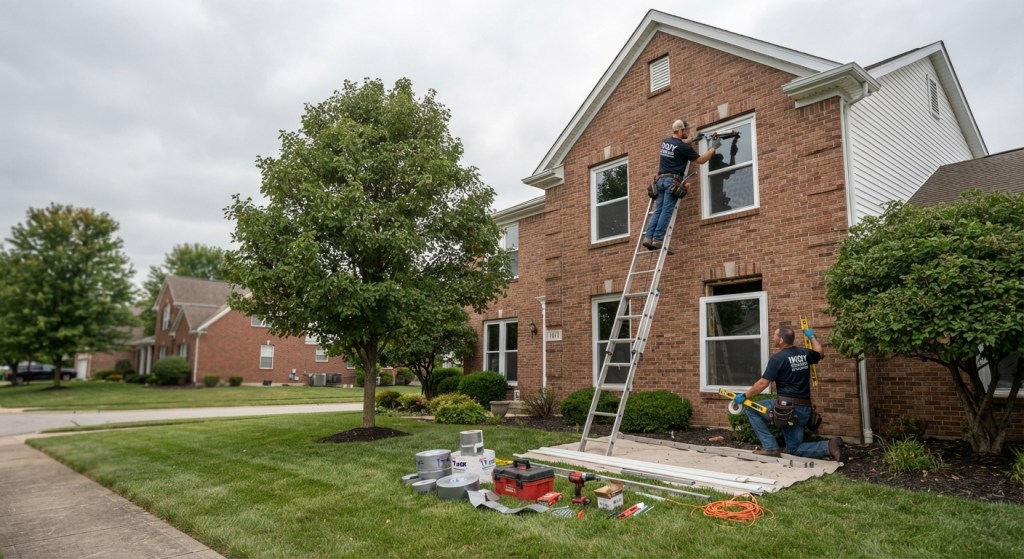
Indianapolis weather is variable. Spring storms, summer humidity, and winter cold fronts all play a role in how installation day goes. While professional installers are equipped to work in a range of conditions, some situations require rescheduling.
Light rain is generally manageable. Installers work quickly to minimize the time a window opening is exposed. Heavy rain, high winds, or freezing temperatures are a different matter. Open wall cavities during a downpour or installation of caulk in sub-freezing temps can compromise the seal and lead to long-term problems.
For scheduling purposes, knowing the best time to replace windows in Indianapolis helps you book your appointment during a season when weather delays are least likely and contractor availability is more flexible. Late spring and early fall tend to offer the most predictable conditions in the Indianapolis area.
The Fenestration and Glazing Industry Alliance (FGIA) tracks industry demand and has noted consistent seasonal peaks in the window replacement market, which means booking earlier in the season gives you more scheduling flexibility and potentially shorter lead times on custom orders.
Monitoring Progress and Communicating with Your Crew
You do not need to micromanage the installation team, but staying informed throughout the day prevents surprises. Check in with the lead installer at natural breakpoints, such as after the first window is done, after lunch, and an hour before the expected completion time.
Ask these questions during your check-ins:
- Are any frames showing signs of damage that were not visible before removal?
- Is the project on schedule?
- Are there any materials issues or unexpected size discrepancies?
- Will all windows be operational before the crew leaves?
Good installers welcome this kind of communication. It signals that you are engaged and makes it easier for them to flag issues quickly rather than waiting until the end of the job.
According to Window + Door magazine’s benchmarking data, customer satisfaction in the window installation industry is closely tied to communication quality between installer and homeowner, not just the technical outcome of the job.
After the Last Window Goes In
Once the final window is installed, the crew does a complete walkthrough with you. This is your opportunity to inspect every window, test the operation, and flag anything that does not look or feel right before they leave.
During the final walkthrough, check:
- Each window opens, closes, and locks smoothly.
- No visible gaps between the frame and the wall on the interior or exterior.
- Caulking lines are clean and continuous.
- Trim is flush and fastened properly.
- The area around each window has been cleaned up.
Any issues identified during the walkthrough should be documented and addressed before the crew packs up. A reputable company will handle these on the spot whenever possible.
Keep your warranty documentation in a safe place. Most quality windows carry manufacturer warranties covering glass seals, hardware, and frame materials. Your installer should also provide documentation of their labor warranty.
The FGIA 2024/2025 Market Study highlights that American homeowners are increasingly prioritizing long-term value and warranty coverage when selecting window products, reflecting a shift toward treating window replacement as a significant home investment rather than a routine maintenance task.
Your Next Step Starts Before Window Installation Day
Window Installation Day does not have to be a source of stress. When you understand the process, prepare your home in advance, and work with a professional crew that communicates clearly throughout the job, the experience is straightforward and the results speak for themselves. A properly installed set of windows improves your home’s comfort, energy efficiency, curb appeal, and resale value in ways that are felt every single day after the job is done.
If you are ready to schedule your installation or still have questions about products, timing, or cost, Indianapolis Window Company is the place to start. Reach out today to request a free in-home estimate and take the first step toward a smoother, better-insulated home.
Frequently Asked Questions
Q: Can windows be installed in one day?
Yes, in most cases, a full home window replacement can be completed within a single day.
The exact timeline depends on the number of windows, the type of installation required, and whether any unexpected frame damage is discovered during the job. A typical Indianapolis home with six to ten standard-sized windows is well within the range of a one-day project for a professional two-person crew. Larger homes or those requiring full-frame replacements may need a second day, but your installer should be able to give you a realistic estimate before the job begins.
Q: How long does window installation take?
A single window typically takes between 30 minutes and two hours to install, depending on the window type and condition of the existing frame.
Pocket or insert installations on the lower end of that range, while full-frame replacements with carpentry work push toward the higher end. Multiply that by the number of windows in your home and you have a rough sense of the total job length. Keep in mind that crew size, window accessibility, and any custom sizing can shift that estimate in either direction. Always ask your contractor for a project-specific timeline during the quote process.
Q: Why does window installation take so long?
Window installation involves multiple precise steps, and rushing any one of them can cause long-term performance and sealing problems.
Each window must be carefully removed, the rough opening inspected and prepared, the new unit fitted and leveled, and then properly sealed and trimmed. On older homes common throughout Indianapolis, installers frequently encounter rotted sills, non-standard opening sizes, or outdated framing that requires attention before the new window can go in. These are not shortcuts a quality crew will take. The time invested in proper preparation and sealing is what determines whether your windows perform well for 20 or more years.
Q: Can windows be installed on a rainy day?
Light rain is generally workable for experienced installers, but heavy rain, high winds, or freezing temperatures typically require rescheduling.
Professional crews are skilled at minimizing the time a wall opening is exposed, which reduces the risk of moisture entering the home during installation. However, heavy precipitation creates real risks: water can enter the wall cavity before sealing is complete, and caulk does not cure properly when applied in wet or near-freezing conditions. If severe weather is in the forecast on your scheduled Window Installation Day, your contractor should reach out proactively to discuss options. Do not hesitate to ask about their weather policy before you book.
Q: Which month is best to replace windows?
Late spring and early fall are generally the best months to replace windows in the Indianapolis area, offering stable temperatures and lower chances of weather-related delays.
April through June and September through October tend to provide the dry, mild conditions that make installation straightforward and allow caulk and sealants to cure correctly. Summer heat and humidity can make certain sealants harder to work with, while winter installations risk exposure to freezing air through open wall cavities. Booking during the shoulder seasons also tends to give you more scheduling flexibility, since peak demand in midsummer and the holiday stretch in late fall can push lead times out significantly.